Medical & allied health · Perth
Medical centre cleaning in Perth
A documented two step clean and disinfect, Whiteley Viraclean AUST L 69000 with the contact time observed, colour coded equipment, and a scope written so it can go straight into your accreditation file.
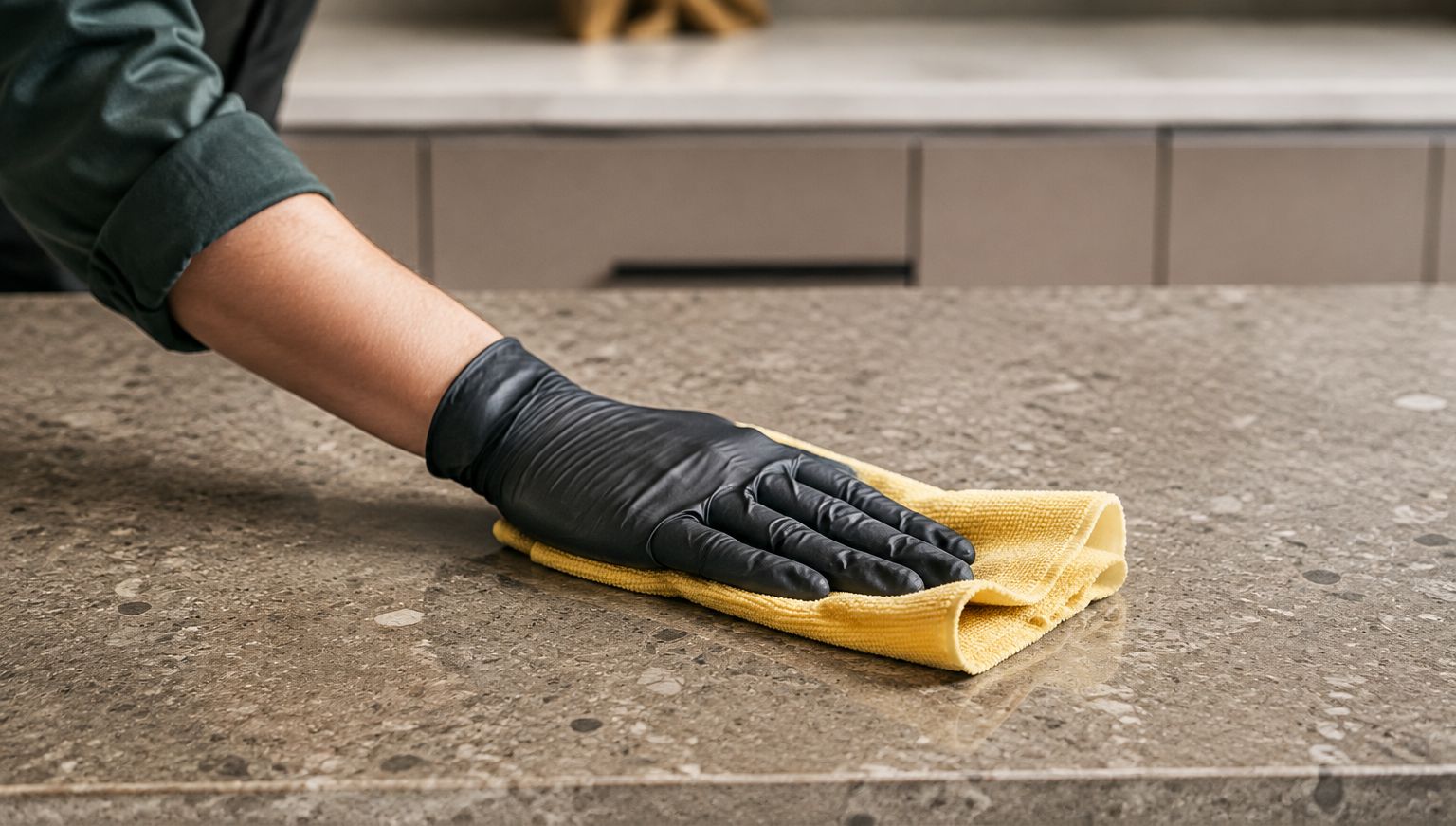
- TGA listed hospital grade disinfectant
- ARTG number on file
- Colour coded cloths and mops
- Documented contact times
- Police checked cleaners
- Audit ready scope of works
Who this is for
Practices where cleaning is part of the evidence
A practice manager preparing for accreditation is not looking for a cleaner. They are looking for a section of a file they do not have to write themselves.
Cleaning is one of the easiest parts of a practice to leave undocumented, and one of the easiest for an assessor to ask about. What product, at what dilution, on which surfaces, how often, with what contact time, and who signed it. Most cleaning contractors cannot answer that in writing. We built the business around being able to, which is also why we charge $66 an hour for clinical work rather than the $58 standard commercial cleaning rate.
Premises we clean
- General practice and medical centres
- Dental and orthodontic practices
- Physiotherapy, chiropractic and exercise physiology clinics
- Podiatry, audiology and optometry rooms
- Psychology and specialist consulting suites
- Pathology collection centres
- Skin clinics and day procedure rooms
- Radiology and imaging reception areas
Protocol
Clean first, then disinfect, then wait
This is the part that separates a clinical clean from a thorough one. It is not harder. It is just done in the right order, with the right product, and given the time the product needs to work.
Step one: clean
Soil is physically removed with a detergent solution and a fresh cloth. Organic matter deactivates disinfectant, so spraying a contaminated surface achieves very little. This step is the one most often skipped because the surface already looks clean afterwards.
Step two: disinfect
Whiteley Viraclean, AUST L 69000, applied to the cleaned surface. It is a TGA listed hospital grade disinfectant and the product most likely to be named in a medical centre's own specification. We keep the ARTG number and the current safety data sheet on your site file.
Step three: observe the contact time
The surface is left visibly wet for the period the manufacturer specifies. Wiping a disinfectant dry immediately is the most common error in clinical cleaning and it makes the whole step decorative. Contact time is written into the scope, not left to memory.
Step four: change the cloth
Cloths are changed between rooms and between area types, never rinsed and reused across a boundary. Colour coding enforces it: a cloth used in a washroom physically cannot be the cloth used on a treatment couch, because it is a different colour and it lives in a different bucket.
Step five: record it
The task, frequency, chemical and contact time sit in your scope document, and a monthly scored quality inspection is issued in writing. When an assessor asks how you know the cleaning is being done, that is the answer.
Boundaries
What our cleaners do not touch
A clear boundary is worth more to a practice than an enthusiastic contractor. Every one of these exclusions is written into the scope so nobody has to make a judgement call at eight in the evening.
- Sharps containers, full or otherwise
- Clinical and contaminated waste streams
- Specimens, samples and anything in a pathology fridge
- Sterilising bays, autoclaves and instrument trays
- Patient records, screens left logged in, or anything on a desk
- Drug cupboards, vaccine fridges and their contents
- Blood or body fluid spills, which follow your own spill procedure, not ours
What we do clean, every visit
Consult and treatment rooms: examination couch and vinyl, height adjustable surfaces, bench tops, sink and tap, cupboard fronts, door and handles, light switches, waste bin, floor. Reception and waiting room: counter, glass, seating including arms and the underside people actually touch, magazines tidied, children's area if there is one, floors vacuumed or mopped. Washrooms: full clinical protocol with dedicated colour coded equipment. Staff areas and corridors: touch points, kitchen, bins, floors.
High touch surfaces get particular attention because they are where transmission actually happens: door handles, light switches, tap handles, chair arms, EFTPOS terminals, reception pens and the counter edge patients lean on.
Cost
What a clinic contract costs
The clinical rate is $66 an hour plus GST. It is above our standard commercial rate because the protocol is slower, the chemicals cost more and the documentation is real work.
Here is a worked example from our pricing model rather than a range. A 180 square metre medical centre with six consult rooms, two treatment rooms, reception, a waiting room, two staff areas and three toilets, cleaned five nights a week, takes two and a half hours a visit. Across 21.7 visits a month, with periodic carpet and hard floor work amortised and 4 per cent for contract management, that is $3,900 plus GST a month.
That works out at $21.67 per square metre per month, which is far above the $2.50 to $6.50 office benchmark, and correctly so. The office band describes open plan floorplates cleaned a few times a week, not a small congested clinical site cleaned twenty one times a month. Any contractor quoting your clinic against an office benchmark has misunderstood the building.
Also relevant
Clinics in the eastern corridor are concentrated around the Midland health precinct, and we cover it from ten minutes away. See commercial cleaning in Midland, or Bayswater for the allied health strip there.
If your practice shares a building with other tenants, the common property is usually the strata scheme's responsibility rather than yours, and is priced separately under strata cleaning. If you also run an early learning service or a training room, the same documentation approach applies to childcare cleaning, with Working With Children Checks added on top.
Questions
Clinical cleaning questions
What disinfectant do you use in clinical areas?
Whiteley Viraclean, ARTG number AUST L 69000. It is TGA listed hospital grade, and we put the ARTG number and the safety data sheet in your accreditation file. We will not tell you something is hospital grade without a number attached to it, because that phrase on its own means nothing and an assessor knows it.
Do you have a documented cleaning scope we can use for accreditation?
Yes. Your scope document is written so it can be attached directly to an accreditation or audit file: area, task, frequency, method, chemical, contact time and who signs it off. A monthly written quality inspection goes with it, so there is a dated record rather than an assurance.
How do you prevent cross-contamination between clinical and non-clinical areas?
Colour coded cloths, mops and buckets, with a documented colour system per area type and a chemical register that states which product is used where. Red for toilets and urinals, yellow for other bathroom surfaces, green for kitchen and food areas, blue for general and glass. The chart is on the wall in the cleaner's cupboard, not filed in a manual nobody opens.
Are your cleaners employees or subcontractors?
Employees, paid under the Cleaning Services Award with superannuation and workers compensation. In a clinical setting this matters more than usual: the protocol only works if the same trained people run it, and subcontracted labour churns.
Why is a two step clean and disinfect necessary?
Because disinfectant applied over soil does not work. Organic matter deactivates the active ingredient, so the surface has to be cleaned first, then disinfected, then left wet for the contact time the manufacturer specifies. A single wipe with a disinfectant spray looks identical and achieves considerably less.
Will your cleaners handle clinical waste or sharps?
No. Our cleaners do not handle sharps containers, clinical waste, specimens or anything inside a sterilising area. Those boundaries are written into the scope so there is no ambiguity on a night shift. We remove general waste, service the bins we are allowed to service, and leave the rest to your own procedure.
Our other city
Marlow also works across Melbourne's northern suburbs from a base in Broadmeadows. The equivalent page there is medical centre cleaning in Melbourne. It is priced separately, because Victorian on-costs are not Western Australian ones: Victoria carries a higher workers compensation rate for cleaning and a portable long service benefits levy that Western Australia does not have.
Next step
Book a free clinical site inspection
Forty minutes with your practice manager, after hours if that suits the clinic better. You get a scope document, the ARTG listing and the certificates before you decide.