Medical & allied health · Melbourne

Medical centre cleaning in Melbourne

General practice, dental, physiotherapy and specialist rooms across Melbourne's northern suburbs. A documented two step clean and disinfect using a TGA listed hospital grade disinfectant we name by its ARTG number, with the paperwork written for your accreditation file.

$72
Per hour + GST, clinical
AUST L 69000
Viraclean ARTG listing
2 step
Clean, then disinfect
Free
Site inspection
  • TGA listed hospital grade disinfectant
  • Observed contact time
  • Colour coded equipment
  • Chemical and SDS register
  • Police checked cleaners
  • Monthly scored inspection

The protocol

Two steps, in the right order, for the right length of time

Most cleaning failures in a clinical setting are not laziness. They are a disinfectant sprayed onto a soiled surface, or wiped off before it has had time to work. Both look finished. Neither is.

Step one: clean

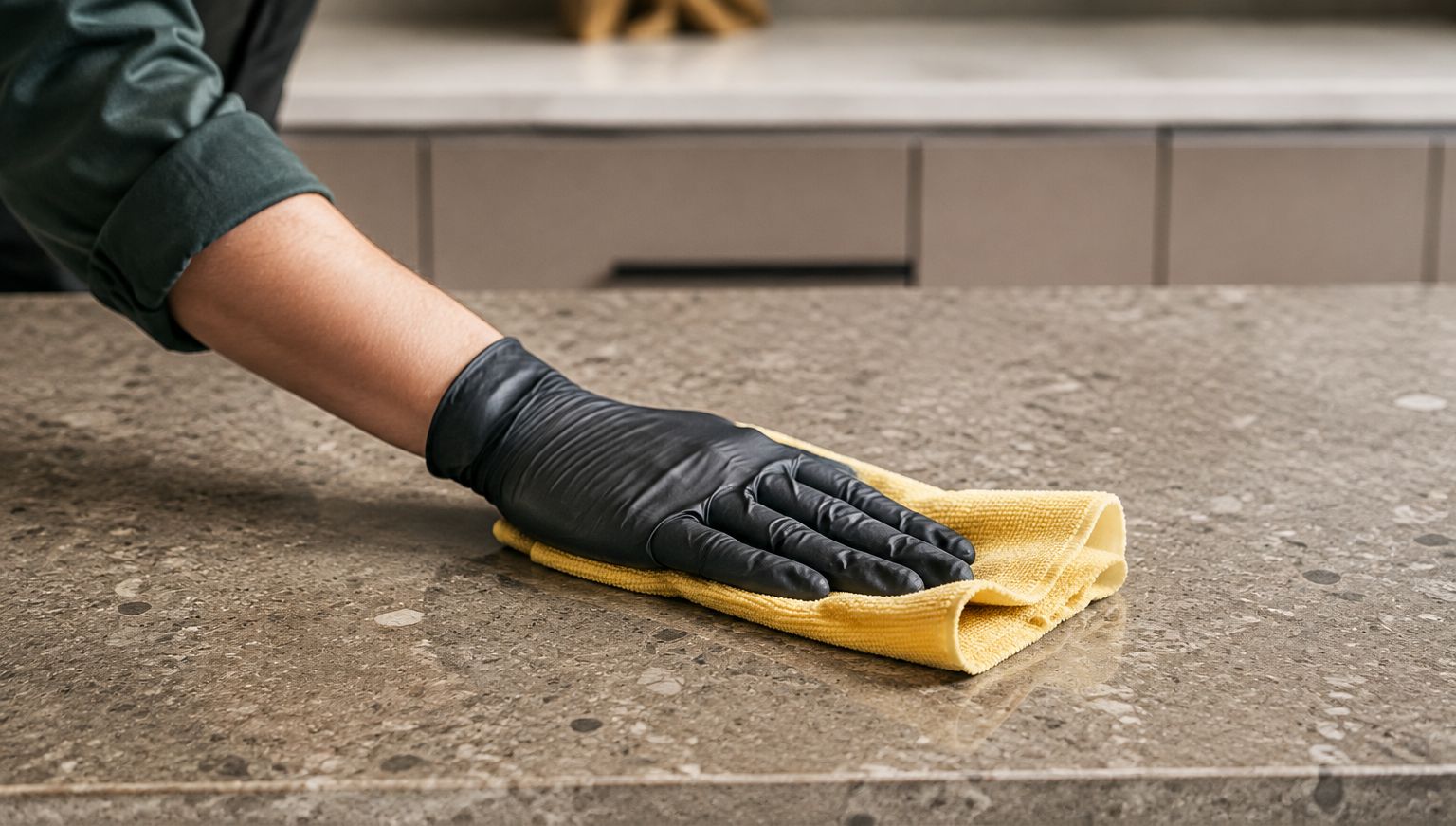
Physical removal of soil with a detergent and a clean cloth. Organic matter inactivates a disinfectant, so a surface that has not been cleaned first cannot be disinfected no matter what is sprayed on it. This step is why a clinical clean takes longer per square metre than an office clean, and it is the step that gets skipped when a contractor has priced the room as if it were an office.

Step two: disinfect

Whiteley Viraclean, a TGA listed hospital grade disinfectant, AUST L 69000. Applied to the cleaned surface and left for the contact time stated on the label rather than wiped straight off. We name the product and its listing number because you can check it, and because a quote that says "hospital grade products" and nothing further is telling you nothing at all.

Colour coded, never crossed

Red for toilets and urinals, yellow for other bathroom surfaces, green for kitchen and food preparation areas, blue for general surfaces and glass. Cloths and mop heads are laundered between sites, not rinsed and reused across rooms. The chart is fixed inside the cleaner's cupboard at your practice.

Where our scope stops

We clean environmental surfaces. We do not handle clinical or related waste, sharps containers, contaminated linen, instrument reprocessing, or anything inside a sterilising area beyond the external environmental surfaces your practice nominates. That boundary is written into the scope in plain words, because a boundary everyone assumes is a boundary nobody owns.

Room by room

A practice is five different cleaning jobs

Quoting a clinic by floor area alone produces a number that is wrong in both directions: too high for the corridors, far too low for the treatment rooms.

Consult rooms

Examination couch and its controls, hand basin and taps, bench surfaces, chair arms, blood pressure cuff hooks, curtain rails, door handles and light switches. Two step clean and disinfect on every high touch surface, every visit, and a couch that is cleaned rather than paper-changed.

Treatment and procedure rooms

Higher frequency, a wider high touch list and closer attention to floor edges and skirtings where fluid tracks. Trolleys, stools, mobile lights and equipment contact points are named individually in the scope rather than covered by "wipe surfaces".

Dental surgeries

Chair, delivery unit, bracket table, spittoon exterior, cabinet fronts, light handles and the operator and assistant seating. High touch density in a dental surgery is roughly double a general practice consult room, which is exactly why the room is timed separately.

Waiting room and reception

The busiest surfaces in the building and the ones your patients judge you on. Seating including the arms and the underside of arm rests, reception counter, screen and card terminal, children's area, magazine table, water station, entry glass and door furniture.

Patient and staff washrooms

Pans, basins, taps, dispensers restocked, mirrors, hard floor with a dedicated mop, sanitary units serviced, and the accessible washroom's grab rails and change facilities where fitted. Dedicated colour coded equipment that never leaves the room type.

Staff areas and corridors

Kitchen, staff room, corridors and stairs. The lowest risk part of the building and the part most contractors over-service to fill the visit while under-servicing the rooms that actually matter.

Accreditation

What the practice manager needs, not what the cleaner wants to say

The person who signs a cleaning contract at a medical centre is usually the person who also has to produce evidence at accreditation. Those two jobs are the same job, and almost no cleaning quote is written as though they are.

So the documentation is the deliverable, not the extra. A dated scope of works per room type with frequencies. A chemical register with a current safety data sheet for every product on site, which in Victoria answers the Occupational Health and Safety Regulations 2017. A named disinfectant with an ARTG listing number. A monthly scored inspection. Police checks on every cleaner attending. All of it in a form you can attach to a file without rewriting it first.

A worked monthly figure

A 180 square metre practice in Craigieburn with six consult rooms, two treatment rooms, reception, two staff areas and three washrooms, cleaned five evenings a week, works out near two and a half hours a visit. At the Melbourne clinical rate of $72 an hour, across roughly 21.7 visits a month, with periodic carpet and hard floor work amortised across the year and contract management shown as its own line, the fee lands near $4,200 plus GST a month.

Our clinical rate in Melbourne is $72 rather than the $66 we charge in Perth. Melbourne clinical cleaning genuinely runs from $60 to well past $85, and pricing below that band would mean either cutting the protocol or losing money on it. We would rather show you the number and explain it.

Where

A health precinct that is still being built

Melbourne's north is adding clinical floor space faster than almost anywhere in the state. The Northern Hospital precinct at Epping anchors a large public and private health cluster, and the surrounding development is bringing new medical suites, day procedure space and allied health rooms with it. Every one of those is a practice that has never had a cleaning contractor, which is a very different sales conversation from displacing one.

Further north, Craigieburn has a growing medical cluster serving one of the fastest growing corridors in the country. Closer in, Preston carries the densest concentration of dental practices and allied health rooms in our catchment along High Street, and Coburg adds allied health above the Sydney Road retail strip.

How we start with a practice

  1. Inspection outside consulting hours

    About forty minutes, arranged around your list rather than through it. We measure, count rooms and fixtures, and ask what your last accreditation raised.

  2. Scope written per room type

    Consult, treatment, surgery, waiting, washroom, staff and corridor are each timed and specified separately. You see the hours, not a lump sum.

  3. Certificates and register issued

    Public liability with the care, custody and control extension, workers compensation, the chemical register and the safety data sheets, before the first clean rather than when you ask.

  4. First clean supervised

    Then a scored inspection at day 30 and monthly after that, in writing, whether you chase it or not.

The full Melbourne rate card sits on commercial cleaning in Melbourne. The Western Australian equivalent of this page is medical centre cleaning in Perth, which carries a different clinical rate for the reasons set out above.

Questions

Clinical cleaning questions

Which disinfectant do you use, and can I check it?

Whiteley Viraclean, listed on the Australian Register of Therapeutic Goods as AUST L 69000. You can search that number yourself, which is the reason we print it. A hospital grade disinfectant is a regulated category in Australia and a contractor who cannot name their product and its listing number is asking you to take the category on trust.

Why is your Melbourne clinical rate $72 when Perth is $66?

Because the two markets are different. Melbourne clinical cleaning runs from around $60 to well past $85 an hour, and $66 sits below the band rather than at the value end of it. Pricing under a market means either shortening the protocol or losing money, and the first is what usually happens. Victorian on-costs are also higher: a 3.155 per cent WorkSafe premium for cleaning and a 1.80 per cent portable long service levy that Western Australia does not have.

Do you handle clinical waste or sharps?

No. We clean environmental surfaces. Clinical and related waste, sharps containers, contaminated linen and instrument reprocessing stay with your practice and your existing waste contractor. That boundary is written into the scope in plain words so there is never a week where each side assumes the other did it.

Can you clean outside consulting hours?

Yes, and most practices want exactly that. Evening work after 6pm and early morning work before 6am attract the after hours rate, and where a practice needs an overnight finish that is quoted at the overnight rate. We show which window your quote is built on rather than quoting a daytime rate for an evening job and adjusting later.

What do you give us for accreditation?

A dated and version numbered scope of works specified per room type, a chemical register with a current safety data sheet for every product held on your site, the ARTG listing for the disinfectant, national police check records for the cleaners attending, certificates of currency for public liability and workers compensation, and a monthly scored inspection report. All in a form you can attach to a file rather than transcribe.

How do you price a practice?

By room type, not by floor area. A consult room, a treatment room, a dental surgery, a waiting room, a washroom and a corridor each carry different times and different protocols, so each is measured and timed separately. You receive an itemised quote showing the rooms, the hours, the frequency and the rate. A clinic priced on square metres alone is over-quoted on its corridors and badly under-quoted on its treatment rooms.

Do you clean dental practices as well as general practice?

Yes. A dental surgery carries roughly double the high touch surface density of a general practice consult room, so it is timed and specified separately rather than counted as another room. The chair, delivery unit, bracket table, spittoon exterior, light handles and operator seating are each named in the scope.

What happens if the practice has an infection control incident?

Call us and we attend. Additional visits with notice are charged at the periodic rate of $68 an hour plus GST, and a call out inside 24 hours is $85. We would rather agree an escalation scope with you in advance, so that increasing the frequency and expanding the high touch list is a phone call rather than a negotiation.
Next step

Book a free site inspection

Arranged outside consulting hours, about forty minutes, no obligation. You get a scope written per room type and three frequency options inside two business days.